

Maxime, quality control lead – financial crime prevention
One team, two countries, a thousand insights.
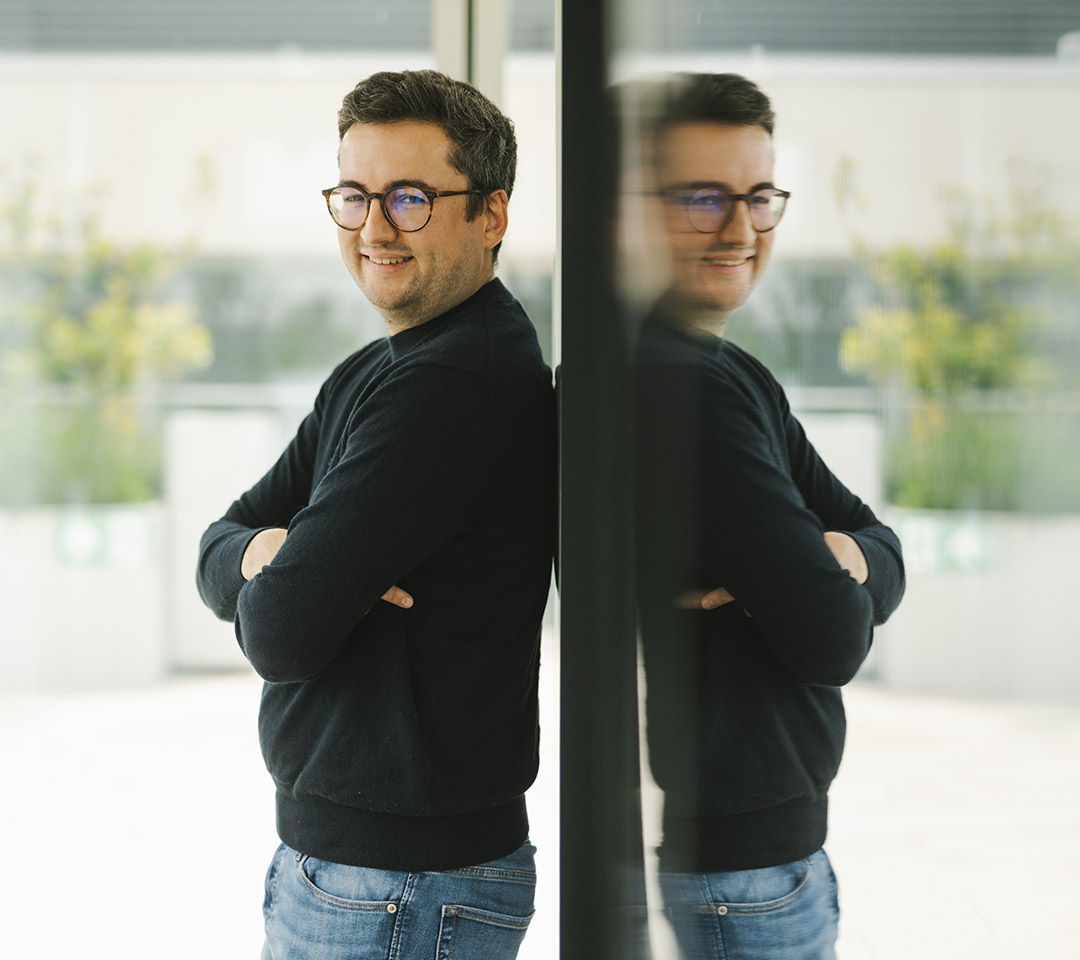
Spending six months working in the Philippines: for me, that was no small step, but a giant leap. In a new job, in an unfamiliar culture and in a life suddenly 10,000 kilometres away.
I’d never been to Asia before. And I’d never really lived on my own before either. So yes, it really was a leap of faith.
What exactly was your assignment in Manila?
I went to Manila to work within the context of KYC. KYC or ‘Know Your Customer’ consists of guidelines put in place by the government to combat money laundering and fraud. My team in Brussels worked closely with a an expert team there. My role was located right on that interface: making processes, people and teams work better together. We’re the link between theory and practice. We translate policy into clear instructions for Operations. Many of those operations are located in the Philippines.
What seems crystal clear on paper in Belgium also has to be usable in the workplace on the other side of the world. In Manila, you notice this immediately. Do people really need that information at that moment? Is everything clear enough? It’s harder to assess that from a distance.
Why did you want to take this step?
The timing was perfect. I was still quite new to my role, but I felt that I was ready to expand my outlook. Professionally, I wanted to work more with international stakeholders.
And personally, the experience just appealed to me. I’d never been to Asia before. That alone made it very interesting.
It wasn’t just processes and tools that made the difference. Culture, communication and trust also played a big role. There’s a big cultural difference of course. What can we learn from Filipino culture? And what can they learn from us? That was an important part of the experience.
I felt that difference in culture immediately, from the first meetings to the informal moments with colleagues. The connection between people is the most important thing there. First you build a personal connection and after that comes the work. It doesn’t make the work less important, but the connection helps.
How did the preparation go?
Between the official green light and my departure, there were about four weeks. During that period, a whole range of practical matters had to be sorted out: flight, apartment, visa, medical appointments and all the formalities.
Fortunately, a great deal was done for me. My apartment, flight and visa were quickly arranged for example. That support made a big difference. Especially because going to the other side of the world isn’t just a professional move.
Did you have any doubts before you left?
Not about the assignment itself, but I did have a few about the distance from home. You leave your partner behind in Belgium for six months, of course. That’s no small matter.
Having clear arrangements helped. As did daily contact with family, friends, and my partner. Professionally too, ties with Belgium remained close. Obviously I was working in Manila, but I was in constant contact with Belgium because we were one team.
How were you welcomed when you got there?
In Manila, I soon felt part of the group. The local team involved me not just in the work to be done, but also in everything else. Before I got there, I thought it might be difficult to be in Manila on my own, but I got a lot of support from my team there, my colleagues in Belgium and my manager.
It was often the small things that made the difference. An invitation to eat together. A spontaneous conversation. A local speciality I absolutely had to try. People are very sociable there. If they went somewhere to eat and you happened to pass by, they would immediately call you in to join them. Not doing so felt almost rude.
What was your daily life like?
In Manila, I worked according to Belgian hours. My working day started around noon and continued into the evening. So before work, I had a fairly big part of the day off. That created a completely different rhythm.
Outside work, I quickly found my routine: an apartment, sports opportunities and new habits. I wasn’t able to travel around that much, but I did get a little glimpse of the country. And it really is a beautiful one.
What did you learn professionally?
The assignment came at a time when I was still very much growing in my role. In Manila, I had the opportunity to get into things quickly, take responsibility and really strengthen the cooperation between the two teams.
One big project I helped to work on was the development of a particular tool. That tool was intended to help measure how realistic processes were, both for Belgium and for the local teams in the Philippines.
The experience gave me a wider perspective on processes, teams and remote collaboration. What we come up with here must also be realistic for the people there. An insight that I still benefit from today. I have learned to see the big picture more clearly.
What has the experience brought you personally?
Apart from work, the assignment also had a real effect on me. Living abroad for six months requires flexibility. And confidence in yourself as well as in others.
I now know that I can get by just fine. Although I must add: I also had many people around me who helped me.
That nuance is important. Becoming more self-reliant doesn’t mean doing everything on your own. It also means knowing who you can count on. For me, that was the colleagues in Manila, the team in Belgium, my manager and the support behind the scenes.
Has this assignment opened doors?
After my return, I continued to work within my domain for several months. In the meantime I’ve become a team leader. Did my experience in Manila help with that? Very possibly. But that wasn’t the purpose of the assignment.
For me, it was mainly about the unknown, international cooperation and the chance to see how colleagues in other countries work.
Would you do it again?
Yes, certainly. It really was a great experience.
And what I would say to someone hesitating to take the plunge themselves? I’d say it’s better to do something and take the risk that it might not work out perfectly than not to do it at all.
I summarise my Short Term Assignment as intriguing and instructive. But there’s one insight that has remained with me most strongly: thanks to this experience, I learned to see the bigger picture. And that’s something I’ll make use of in my future career.
An STA or Short Term Assignment is a temporary foreign assignment that lasts for a few months. Those who travel abroad for longer periods will usually do so under an LTA, a Long Term Assignment. In both cases, it’s all about gaining international experience, sharing knowledge and bringing teams closer together across national borders.


Read our employee stories
Known for an excellent work culture, great benefits and engaging work, we believe in sustainable progress for everyone, not just a few.
Want to know more? Who better to talk to than your future colleagues?